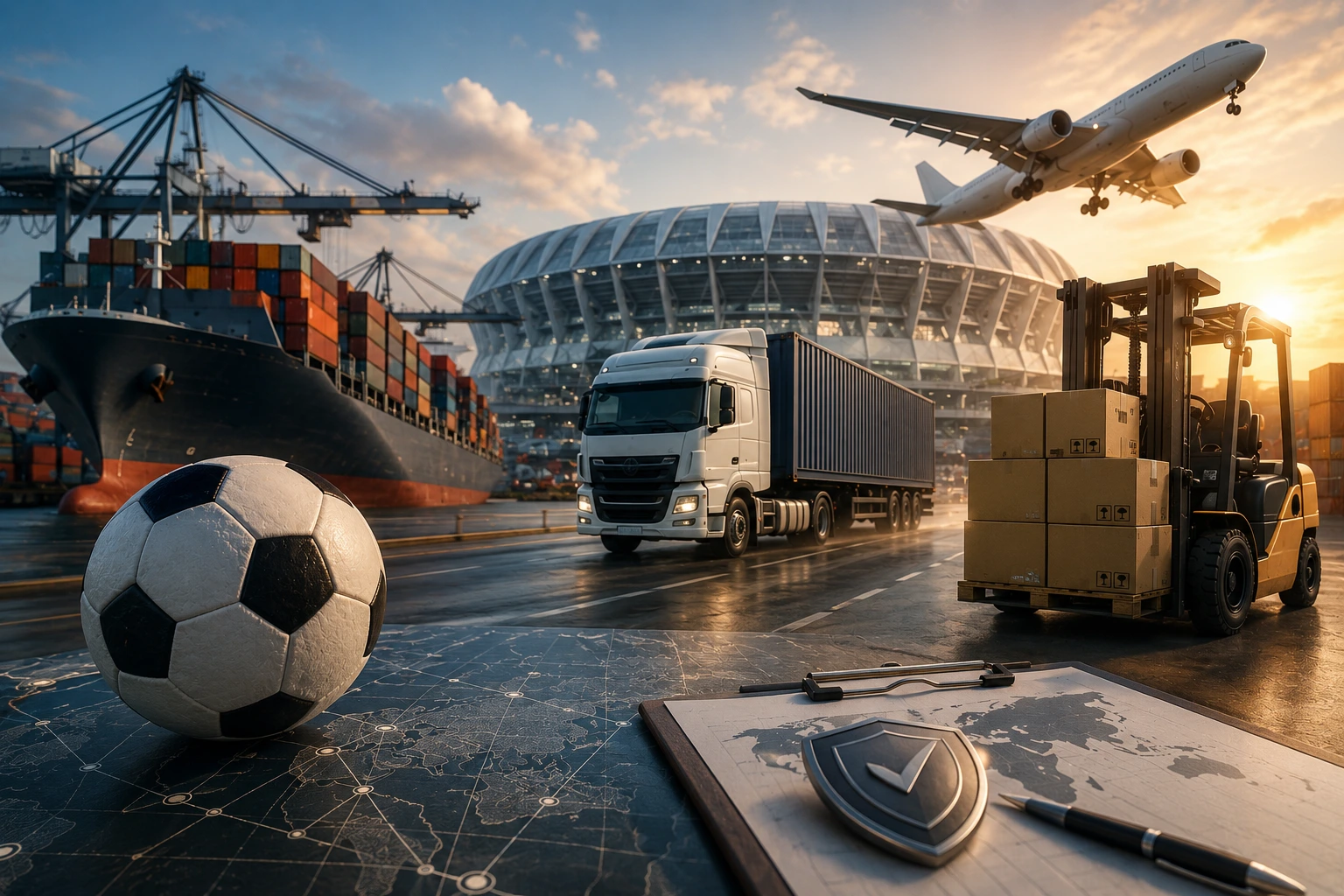
The world's largest sporting event is just around the corner. Yet behind every match lies a far more complex operation: logistics.
With 48 national teams, 104 matches, and three host countries, the 2026 FIFA World Cup will do more than bring together millions of fans. It will place unprecedented pressure on highways, customs checkpoints, airports, distribution centers, and supply chains across North America.
For Mexico, the challenge goes far beyond welcoming tourists. The real task will be maintaining the efficient flow of goods in an environment of high demand and increased exposure to risk.
More Than 5 Million Visitors and a Supply Chain Under Pressure
Mexico is expected to welcome more than 5 million visitors during the tournament, while FIFA estimates that over 6.5 million fans will attend matches throughout the competition.
This surge in mobility will directly impact:
- Ground transportation
- Distribution centers
- Inventory management
- Border crossings
- Last-mile operations
- Airport infrastructure
Each of these areas represents an operational challenge for businesses that depend on timely deliveries and efficient supply chains.
Economic Growth That Also Brings Logistical Challenges
Several studies estimate that the World Cup could generate between $4.186 billion and $6.073 billion USD for the Mexican economy, while contributing between 20 and 30 basis points to Mexico's GDP in 2026.
While these figures represent a significant opportunity for many industries, they also imply:
- Increased consumer demand
- Higher cargo volumes
- More import and export activity
- Greater pressure on logistics infrastructure
In other words: more business, but also more complexity.
The Real Challenge: Moving Goods in a Congested Environment
The World Cup will not only increase demand for tourism-related services.
It will also drive the movement of:
- Food and beverages
- Technology and display equipment
- Promotional merchandise
- Sports equipment
- High-value goods
- Mexican exports such as tequila and avocados
As cargo volumes increase, so do the risks associated with logistics operations.
More Movement Means More Exposure to Risk
Large-scale events often lead to challenges such as:
- Route congestion
- Higher concentrations of goods in transit
- Customs delays
- Operational disruptions
Damage during loading and unloading operations, documentation errors, transportation accidents, and supply chain interruptions can all impact business continuity.
The reality is that risk does not increase simply because a World Cup is taking place.
Risk increases because there is more movement.
Prevention Will Be the Decisive Factor
The organizations best positioned to navigate this environment will be those that begin preparing now.
Recommended actions include:
✔ Reviewing strategic transportation routes
✔ Actively monitoring cargo shipments
✔ Optimizing inventory planning
✔ Establishing incident response protocols
✔ Evaluating insurance coverage
✔ Conducting risk assessments based on cargo type
The 2026 FIFA World Cup represents a tremendous economic opportunity for Mexico, but it also presents one of the most significant logistics challenges in recent years.
While millions of people focus on what happens on the field, businesses across the country will be responsible for keeping goods, inventories, and critical supply chains moving.
In an environment where operational pressure is expected to rise significantly, prevention, planning, and effective risk management strategies will be just as important as any play made during the match.
Because the real game is also played beyond the field.